
طراحی انواع شیرالات و تجهیزات صنعتی به صورت کامل در این شرکت دانش بنیان انجام می گیرد. واحد مهندسی و تحقیق و
توسعه مطابق با آخرین استاندارد های ملی و بین المللی طراحی نسبت به طراحی و یا بازطراحی شیرآلات اقدام می نماید.
.همچنین جهت کاربری های سفارشی امکان طراحی شیرآلات بر اساس نیاز کارفرما در این مجموعه امکانپذیر می باشد
شیرآلات تجهیزات مکانیکی می باشند که جهت کنترل سیال و فشار آن در سیستم های پایپینگ استفاده می شوند و اجزاء بسیار مهمی در این سیستم های می باشد که امکان کنترل انواع سیال را شامل می شوند.
انواع مختلفی از شیرآلات بسته به نوع و مکانیزم آب بندی و باز و بست آنها وجود دارد.
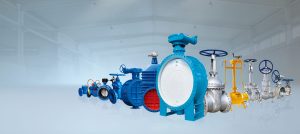
Functions from Valves are..
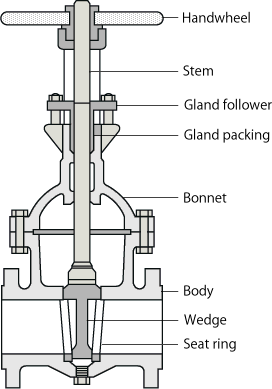
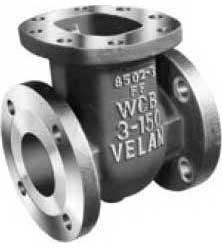
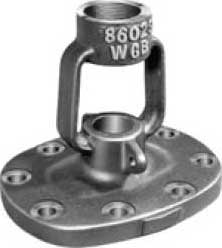
Disc The disc is the part which allows, throttles, or stops flow, depending on its position. In the case of a plug or a ball valve, the disc is called plug or a ball. The disk is the third most important primary pressure boundary. With the valve closed, full system pressure is applied across the disk, and for this reason, the disk is a pressure related component. Disks are usually forged, and in some designs, hard surfaced to provide good wear properties. Most valves are named, the design of their disks.
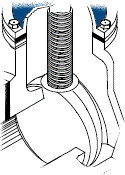
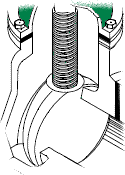
Typical sealing assembly
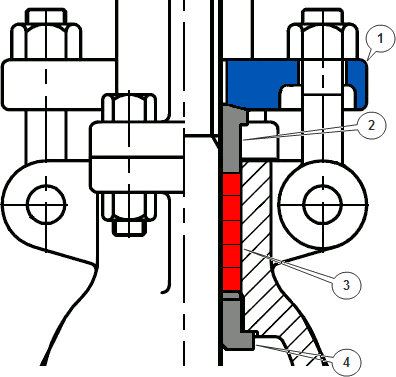
1 Gland Follover
2 Gland
3 Stuffing Box with Packing
4 Back Seat
Valve Yoke and Yoke Nut
Yoke
A Yoke connects the valve body or bonnet with the actuating mechanism. The top of the Yoke holding a Yoke nut, stem nut, or Yoke bushing and the valve stem passes through it. A Yoke usually has openings to allow access to the stuffing box, actuator links, etc.. Structurally, a Yoke must be strong enough to withstand forces, moments, and torque developed by the actuator.
Yoke Nut
A Yoke nut is an internally threaded nut and is placed in the top of a Yoke by which the stem passes. In a Gate valve e.g., the Yoke nut is turned and the stem travels up or down. In the case of Globe valves, the nut is fixed and the stem is rotated through it.
Valve Actuator
Classification of Valves based on Motion
| Valve Types | Linear Motion | Rotary Motion | Quarter Turn |
| Gate | YES | NO | NO |
| Globe | YES | NO | NO |
| Plug | NO | YES | YES |
| Ball | NO | YES | YES |
| Butterfly | NO | YES | YES |
| Swing Check | NO | YES | NO |
| Diaphragm | YES | NO | NO |
| Pinch | YES | NO | NO |
| Safety | YES | NO | NO |
| Relief | YES | NO | NO |
Class Ratings
Pressure-temperature ratings of valves are designated by class numbers. ASME B16.34, Valves-Flanged, Threaded, and Welding End is one of the most widely used valve standards. It defines three types of classes.. standard, special, and limited. ASME B16.34 covers Class 150, 300, 400, 600, 900, 1500, 2500, and 4500 valves.
Different types of valves are used in process plants, so there are many standards for valves. Below are the most common..
ASME B16.10 covers Face-to-Face and End-to-End Dimensions of Ferrous Valves
API 6D is used to design a valve that is used in the transportation pipeline.
API 600 is used for Bolted Bonnet Steel Gate Valves for Petroleum and Natural Gas Industries
API STD 602 is used to design Compact Steel Gate Valves – Flanged, Threaded, Welding, and Extended-Body Ends.
API STD 594 covers the design, material, face-to-face dimensions, pressure-temperature ratings, examination, inspection, and test requirements for Check Valves with Flanged, Lug, Wafer, and Butt-welding type ends.
API STD 599 covers design for Metal Plug Valves with Flanged, Threaded, and Welding Ends, in sizes NPS 1 through NPS 24.
API STD 609 is for Butterfly Valves with Double Flanged, Lug- and Wafer-Type.
API STD 526 covers Flanged Steel Pressure Relief Valves.
API RP 520 Part 1 overs Sizing and Selection, and Part 2 covers Installation of Pressure-Relieving Devices in Refineries.
API STD 598 covers inspection, supplementary examination, and pressure test requirements for both resilient-seated and metal-to-metal seated gate, globe, plug, ball, check, and butterfly valves at the valve manufacturer’s plant.